
From four cameras and constant false alarms to full coverage
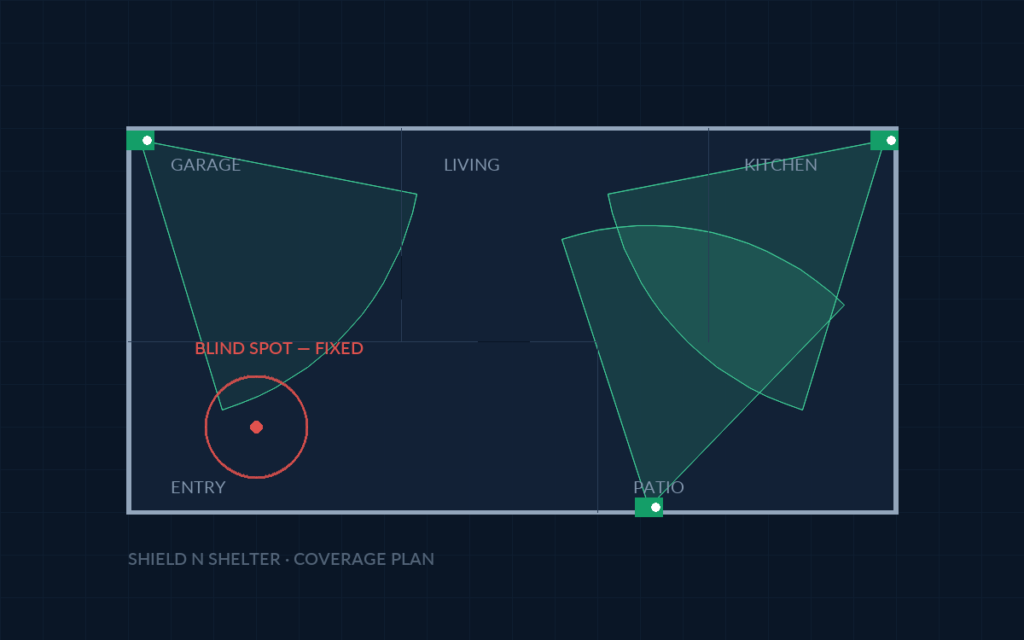
Four cameras, dozens of daily false alarms, and a family that had stopped opening the app. We rebuilt the coverage around real approach paths — with one fewer camera.
The challenge
Four cameras had been installed over three years, each added after a scare and aimed wherever the mount fit. The result was dozens of daily false alerts — passing cars, next door’s driveway, a tree that moved in wind.
- The rear corner, the most likely approach, was completely dark.
- Two cameras covered the same photogenic front angle.
- Nobody in the family had opened the app in weeks.
The plan
The assessment started from what they already owned, not a shopping list.
- Re-aimed two cameras onto the walkway and driveway approaches.
- Retired one redundant front-facing camera entirely.
- Added a single floodlight camera at the rear corner.
- Rebuilt every motion zone to exclude the street and the tree line.
The result
False alerts dropped by 92% in the first month, and every entry point now sits inside a verified coverage cone.
The family reads their alerts again — because an alert finally means something. Total new hardware: one camera.
More case studies
 New build · US
$1,400+ saved
vs. the installer quote
Security designed before move-in day
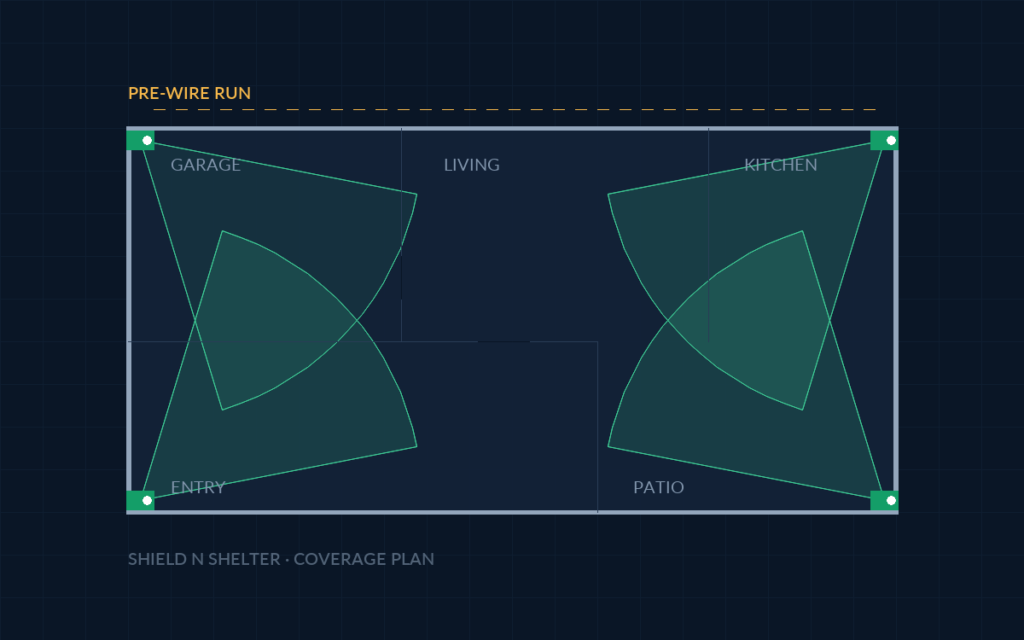
An installer quoted $2,300 for a generic six-camera package before the drywall was up. We planned four positions from the builder’s floor plan instead.
Read the case study →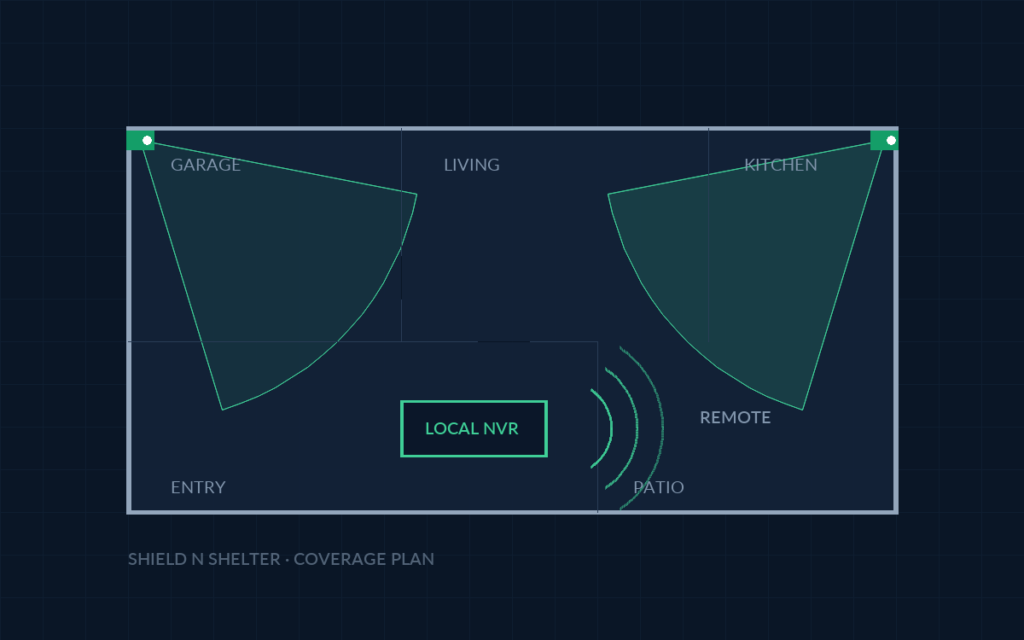 Second home · Out of state
$0 contracts
full remote visibility
Remote monitoring for a house empty 40 weeks a year
A holiday home in another state, empty most of the year, on patchy rural internet — and owners with no appetite for monthly monitoring…
Read the case study →Your home could be the next case study
Book a virtual home security assessment. In about a week you’ll hold a complete, independent protection plan — no hardware pitch, no contract.
Ready for a quick call? Explore a Sample Report