
Bi-fold and closet doors are designed for convenience, not security. Their lightweight panels, folding hinges, and simple tracks make them easy to operate, but they can also make it difficult to restrict access.
Whether you’re keeping children away from hazardous items, protecting valuables, or maintaining privacy from roommates, you don’t necessarily need to replace the door or drill into the frame. Several options can provide additional access control without permanent modifications.
The right solution depends on what you’re protecting, how the door is constructed, and whether you rent or own your home. Before choosing hardware, consider how the door opens and what level of protection you actually need.
Choose a Lock Based on Your Needs
A lock intended to keep a toddler away from cleaning products serves a different purpose from one designed to protect personal belongings. Start by identifying why you need the lock.
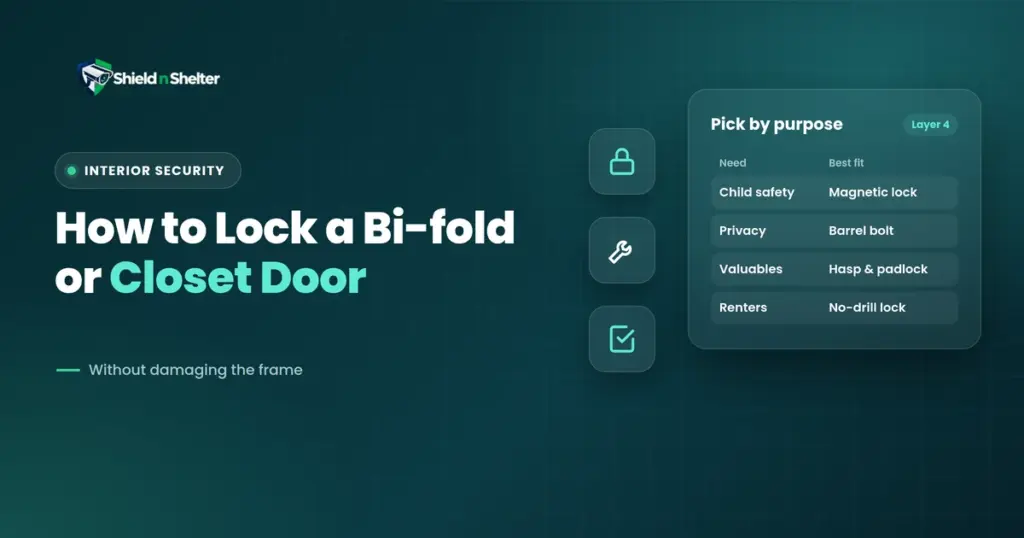
Child Safety: Magnetic Locks and Adhesive Latches
Magnetic child locks are useful for closets containing cleaning products, tools, medicines, or other household hazards. Many attach to the inside of a door with adhesive, eliminating the need for screws or holes. An adult uses a matching magnetic key to release the mechanism.
Adhesive safety latches are another option, although not every model works with folding panels. Check the manufacturer’s instructions to ensure the latch won’t interfere with the door’s movement.
These devices provide additional safety but aren’t substitutes for supervision or secure storage. Adhesive strength also depends on the surface, and removing a lock can sometimes affect paint or finishes.
Valuables Storage: Hasp and Padlock or Cam Lock
A hasp and padlock can discourage casual access to a closet containing personal belongings or documents. The hasp attaches to the door, and a padlock holds it closed.
However, installation usually requires screws. Lightweight or hollow-core bi-fold panels may not provide a reliable mounting point. Pulling on poorly supported hardware can damage the door.
A keyed cam lock uses a small rotating metal arm, called a cam, to secure a door against a fixed surface. These locks are common on cabinets and storage units, but they’re not automatically suitable for bi-fold doors. Many require drilling and enough material to support the mechanism.
If preserving the door is important, consider a removable lockable storage container instead.
Safe-Room or Emergency Storage
Some households want to restrict access to emergency supplies or equipment stored in a closet. A lock can discourage casual access, but a standard bi-fold door shouldn’t be treated as a security barrier.
Its panels, hinges, or track may fail under force, regardless of the lock fitted. If the closet contains emergency equipment, ensure everyone who may need it can access it quickly.
For an actual safe room, use a purpose-designed door and appropriate professional guidance. A lightweight closet door isn’t a substitute for a properly designed security door.
Roommate Privacy: Sliding Bolts and Removable Locks
For basic privacy in a shared home, a sliding barrel bolt may be sufficient to discourage someone from opening the closet.
Depending on the layout, it can secure compatible panels together or hold a panel against a fixed surface. However, incorrect placement can obstruct folding or put unnecessary strain on the hinges.
Renters who cannot drill can consider removable bi-fold locks designed for compatible panels. Our DIY home security planning guide lists more renter-safe options.
6 Ways to Lock a Bi-fold or Closet Door
Different mechanisms offer different levels of convenience and permanence. Check compatibility before installing any hardware.
| Lock type | Best suited for | Installation |
|---|---|---|
| Sliding barrel bolt | Basic privacy | Usually requires screws |
| Hasp and padlock | Restricting casual access | Usually requires drilling |
| Magnetic child lock | Child safety | Often adhesive-mounted |
| Keyed cam lock | Compatible storage doors | May require drilling |
| Track stop | Limiting door movement | Depends on track design |
| Removable bi-fold lock | Temporary access control | No drilling |
Sliding Barrel Bolts
A barrel bolt consists of a sliding metal rod and a receiving plate. When the rod slides into the plate, it prevents the door from opening.
Depending on the design, it may secure two adjoining panels or connect a panel to a fixed surface. Its main advantage is simplicity, but installation generally requires screws.
The door must have enough solid material to support them. Position the bolt carefully so it doesn’t interfere with the folding mechanism.
Hasp and Padlock
A hasp provides a visible point for a padlock and can deter casual access. It may be appropriate when appearance is less important and the door can support the hardware.
On lightweight bi-fold panels, however, screws may loosen or pull free. The fitting can also obstruct the panels if positioned poorly.
Magnetic Child Locks
Magnetic locks are discreet and often avoid drilling. They’re best used for child safety rather than protecting valuables from determined access.
Confirm that the lock is designed for your door arrangement and follow the manufacturer’s installation and removal instructions.
Keyed Cam Locks
Cam locks provide key-operated access control and are common on cabinets. Their suitability for closet doors depends on panel thickness, material, and mounting space.
Installing one may require drilling, making it unsuitable for renters or anyone trying to preserve the original door.
Track Stops
Track stops limit how far a sliding door can travel. Some may work with particular bi-fold systems, but compatibility varies.
A stop isn’t necessarily a lock. It may restrict movement without preventing someone from bypassing it. Treat it as a movement control rather than dependable security.
No-Drill and Renter-Safe Alternatives
Removable bi-fold locks, adhesive latches, and compatible track blockers can provide temporary access control without permanent changes.
A removable bi-fold lock typically fits over the top edge of compatible panels, preventing them from folding open.
Check the door’s dimensions and the manufacturer’s fit guidance. Adhesives can still affect delicate paint or finishes, so review removal instructions before installation. Never force a device that doesn’t fit securely.
How to Avoid Damaging the Door or Frame
Bi-fold doors rely on hinges, pivots, and tracks to move smoothly. A lock placed in the wrong position can obstruct these components, make the door difficult to operate, or put unnecessary pressure on the panels.
Before installing hardware:
- Inspect the door: Identify whether it’s hollow-core, solid, or made from another material.
- Check clearance: Make sure the lock won’t interfere with hinges, pivots, tracks, or folding panels.
- Choose compatible hardware: A cabinet lock or sliding bolt may not suit a bi-fold door.
- Avoid weak mounting points: Lightweight panels may not support heavy hardware or repeated pulling.
- Review rental rules: Check whether drilling or permanent modifications are permitted.
If you’re unsure whether a panel can support a fitting, choose a removable option or consult a qualified installer. Not every part of a hollow-core door can hold screws securely.
A poorly supported lock can loosen over time and leave more damage than the original problem. When preserving the door matters, a compatible removable device is usually the more practical choice.
An Interior Lock Is a Delay Device, Not a Security Barrier
A lock on a lightweight closet door can discourage casual access, but it cannot provide the protection of a properly constructed security door.
Bi-fold doors are built for convenient movement. Their panels, hinges, and tracks may be the weakest parts of the assembly, regardless of the locking mechanism.
Within Shield N Shelter’s five-layer home security risk assessment model, interior door locking belongs to Layer 4: Interior Security. It adds another level of access control inside the property, complementing other security measures rather than replacing them.
For valuable belongings, consider a suitable lockable storage container. For broader home security, combine interior access control with appropriate exterior protection.
The goal is to make access less casual, not to claim that a closet door can withstand forced entry.
Don’t Compromise Fire Safety
Never install a lock that could prevent someone from leaving a room during an emergency or reaching essential equipment.
If a door is part of an escape route, ensure the locking mechanism can be released promptly from the side where someone may need to exit. Keep keys accessible where necessary and follow applicable fire-safety requirements.
The same principle applies to emergency supplies. Anyone who may need them should be able to reach them without unnecessary delay. Avoid any arrangement that could trap someone or obstruct a safe exit.
Final Thoughts
Locking a bi-fold or closet door without damaging the frame is possible, but the right solution depends on the door and your purpose.
Magnetic locks and adhesive latches can help with child safety. Sliding bolts and hasps may provide basic access control when the panels can support them. Keyed cam locks suit compatible storage doors, while removable locks are often more practical for renters.
Before installing anything, consider the door’s construction, available clearance, and the risk of damaging its finish. Most importantly, treat an interior lock as a deterrent, not a security barrier, and never compromise emergency access.
A sensible solution adds privacy and control while keeping the door safe and usable.