
A new home security setup works best as a sequence rather than a shopping list. This is the order that actually matters across your first month in the house.
The first night in our last place, I woke up at 3:17 a.m. convinced someone was in the kitchen. It turned out to be the refrigerator ice maker, which the previous owners had left on the “vacation” setting so it periodically dumped a tray with a sound like a drawer slamming. I stood in the hallway in socks, holding a baseball bat we still hadn’t unpacked, feeling both relieved and slightly ridiculous. That was the moment I realized we’d changed the utilities and ordered pizza, but we still hadn’t changed the locks.
Most new homeowners do some version of the same thing. You’re exhausted, the boxes are a maze, and security feels like a project for “once things settle.” Then a week goes by, then a month, and the spare key is still under the same ceramic frog the last family used. This guide is built around the actual timeline of a move—before the boxes take over, the first week, and the first month—so the important steps don’t get buried under furniture assembly instructions.
If you’d rather hand the core work to someone else while you’re still finding the coffee filters, a professional (New Home Security Setup) can cover the essentials in one visit.
New home security setup: before the boxes come in
This window is short and valuable. Once the truck is emptied, every simple task competes with “where does this lamp go?”
I learned the lock lesson the hard way on an earlier rental. We’d been there three weeks when a former tenant’s cousin showed up, cheerfully trying his old key because “it always worked.” It still did. We stood there in awkward silence while he apologized and I made a same-day locksmith appointment. Since then I’ve treated rekeying as non-negotiable, even when the sellers were lovely people. You don’t know how many copies floated around—realtors, cleaners, painters, the neighbor who watered plants. A locksmith can rekey most deadbolts in under an hour. Do the exterior doors, the door from the garage into the house, and anything that leads to a basement or side yard. While the locksmith is there, ask them to check whether the bolt fully seats in the strike plate. I’ve seen more than one “secure” door where the bolt barely caught.
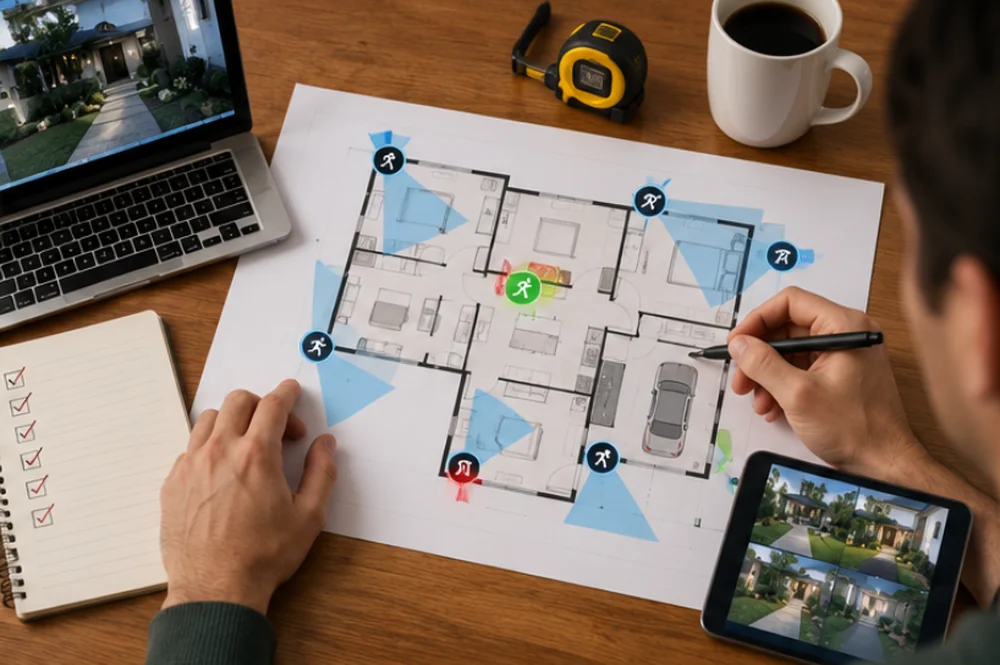
Walk the property with a notepad before the furniture arrives. Open every window latch. Try the sliding door from the outside. Note dark corners near entrances. On one house we looked at, the side gate was beautifully landscaped—and completely hidden from the street and the front windows. Perfect for someone who didn’t want to be seen. You don’t need to fix everything that day; you just need a clear list so nothing important disappears into the move-in fog.
If the house comes with leftover cameras or an old alarm panel, deal with them immediately. A friend moved into a place where a doorbell camera was still sending motion alerts to the previous owner’s phone. For two weeks. The old owner was decent about it and helped transfer the account, but the discomfort was real. Either take control of existing gear or remove it.
One more small habit from that pre-box stage: stop posting the new address and “finally moving in!” photos until the locks are changed and the obvious entry points are secure. Empty rooms and open garage doors photograph poorly for a reason.
The first week: cameras, codes, and lighting
This is when the house starts feeling familiar and the shortcuts begin. You run out for milk and leave the garage open. You prop the back door while carrying in another load. I’ve done both.
Visibility is the highest-return move most people under-invest in. A video doorbell or one decent outdoor camera covering the front approach changes how the house feels at night. Position it to catch faces, not just hats and hoods, and test the night vision after dark—what looks fine in the app at noon can be a washed-out mess at 9 p.m. On our current street, a neighbor’s camera recorded a package thief at 2 p.m. on a Tuesday. The video was clear enough that the police didn’t need much imagination. The thief had clearly assumed no one was watching in the middle of the day.
Garages deserve special attention. A former coworker had his bikes taken through an unlocked interior door after someone walked in through an open garage while he was mowing the back yard. He was fifty feet away. The fix is boring and effective: change the opener code, lock the door between garage and house even when you’re home, and treat the garage like an exterior space. If previous owners programmed Homelink buttons in their cars, those codes may still work until you clear them.
Create a deliberate key plan instead of the usual slow leak of copies. Decide who gets physical keys or codes, write it down, and avoid the classic hide-a-key spots. The fake rock, the mat, the top of the frame—thieves know those too. A simple lockbox with a code, placed somewhere non-obvious, is less convenient and far safer for the rare emergency.
Use the first week to photograph serial numbers on electronics, tools, and bikes while you can still find them. I keep a cloud album called “If This Gets Stolen.” It took twenty minutes and felt slightly paranoid until a friend needed exactly that documentation after a break-in. Suddenly it looked like common sense.
The first month: monitoring, detectors, and neighbours
By now the urgent gaps should be closed. The work shifts from “stop the obvious problems” to “make this sustainable when you’re tired or out of town.”
Pick a monitoring style that matches your actual personality. Some households want professional monitoring and are happy to pay for it. Others will ignore a system that cries wolf three times a week. I lean toward clear phone alerts and a couple of well-placed cameras rather than a complex setup I won’t maintain. Test the notifications at different times. If they only work when you’re on Wi-Fi, that’s useful information before you rely on them.
Think in layers instead of gadgets. Strong locks and a reinforced strike plate matter more than a fifth camera. Lighting that eliminates dark pockets near doors matters more than a siren you’ll never arm. A neighbor who knows your name and has your number is often more effective than another sensor. After we introduced ourselves to the couple two doors down and traded numbers “in case something looks off,” we started getting texts about unfamiliar cars. Nothing dramatic came of it, but the street felt less anonymous.
When you leave for more than a day, the goal is ordinary continuity: lights on timers, mail held or picked up by someone local, packages not stacking up like a billboard that says empty house. A radio on a timer sounds almost comically old-fashioned until you notice how much life it adds to a quiet interior.
Finally, put the boring paperwork where you can actually find it—insurance policy number, non-emergency police line, system passcodes. The first month is also a good time to confirm smoke and CO detectors still work and aren’t a decade old. Security includes not burning the place down by accident.
Condensed 21-point move-in security checklist
Keep this somewhere visible, or turn it into a one-page printable you can work through as you go.
Before move-in and the first 48 hours
- Rekey or replace all exterior locks
- Secure the garage-to-house door
- Take control of or remove existing cameras and alarm gear
- Walk the property and list every entry point
- Fix or note exterior lighting problems
- Collect and secure any spare keys left behind
- Hold off on public address posts until the basics are done
The first week
- Add front-door camera or video doorbell coverage
- Change garage door opener codes
- Add secondary locks or a dowel to sliding doors
- Improve ground-floor window latches where needed
- Set light timers or smart plugs for evening hours
- Write down who has keys or access codes
- Photograph serial numbers of valuables
The first month
- Choose monitored or self-monitored approach and test alerts
- Trim landscaping that blocks views of doors and windows
- Test smoke and CO detectors; replace if old
- Store emergency contacts and insurance details accessibly
- Exchange numbers with one or two neighbors
- Set a package and mail plan for absences
- Do a final walk-through of anything you postponed
Closing the gap without waiting for perfect
You don’t need a flawless system before you sleep in the house. You need the highest-risk openings closed early and a realistic plan for the rest. Changing the locks, controlling the garage, putting eyes on the front approach, and knowing your entry points will put you ahead of most households still living on good intentions.
If the list feels heavy on top of everything else a move demands, a focused New Home Security Setup can handle the critical path so you’re not improvising at midnight with a flashlight and a growing sense that you forgot something important.
Start with the locks. Everything else is easier once you know only the right people can walk through the front door.
For the condensed version of day one, the first 24 hours checklist covers the same ground in a form you can work through on the day itself. If you are installing the hardware yourself rather than hiring it out, the DIY planning guide sets the order. And the locks you inherit are worth reconfiguring immediately: three smart-lock settings explains which ones.
Need Professional, Brand-Agnostic Guidance?
Shield & Shelter provides 100% independent residential security consulting with zero equipment markups and zero vendor kickbacks.