
A screen or storm door sounds good on paper, and many homeowners prefer them as they think these finicky doors offer an extra layer of security.
But that’s just it. They don’t, really.
At best, they provide a psychological barrier. With brute force and reverse engineering, you can easily bypass the doors and get inside the house.
It’s like hiding behind an umbrella during a tornado. You may feel safe momentarily. But a fierce gust of wind will easily blow away your umbrella.
That being said, screen or storm doors do a good job keeping your toddlers and small pets inside the house. So, they’re not completely useless.
In this guide, we’ll cover the practical options on how to lock a screen or storm door within a budget as well as discuss renter-friendly approaches. Additionally, we’ll guide you on how to strengthen your overall security so that the screen door isn’t the only thing standing between you & an intruder.
What is a Screen/Storm Door? What Does It Do?
Screen doors typically have a light aluminum or vinyl frame. On the inside, they have mesh panels. The scary part? These mesh panels can be cut to pieces easily with nothing but a simple pocket knife.
Storm doors, on the other hand, can sometimes have a stronger build. Many high-quality storm doors come with an aluminum frame, with glass or acrylic insertions. Even then, they are not remotely as secure as actual deadbolts.
So, what even is their function in a house?
Well, for starters, it can prevent casual opening and act as a mental barrier. It can prevent the toddlers and pets from sneaking out of the house unsupervised. It can also stop the main door from swinging open or banging.
But the threat remains. A screen or storm door is ineffective against pry bars, a swiss pocket knife, or even a hard kick to the frame. Essentially, it’s not going to stop a determined intruder from entering the house by itself.
5 Practical Ways To Lock a Screen/Storm Door
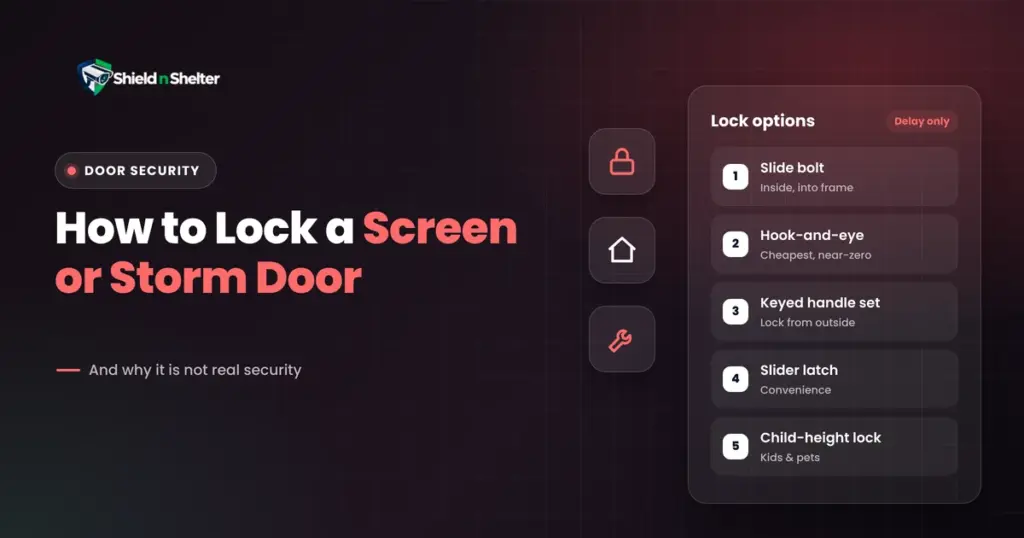
Many homeowners still want the screen or storm door for the aesthetics. If you’re one of them, here are five practical ways to install their locks:
1. Surface-Mounted Slide Bolt
A slide bolt works great for both screen and storm doors. It screws onto the inside part of the door and slides into a strike on the frame.
A couple of tips that we can offer:
- Install it on the inside. Even if the thief cuts through the mesh panel, they should have a hard time reaching the bolt.
- Screw To The Frame. Make sure the screw doesn’t go over the mesh border. Rather, it should go all the way into the frame for stability.
However, it’s important to remember. If the frame itself is thin and finicky, the screws might eventually pull out despite your best efforts.
2. Hook-and-Eye Latch
Want the cheapest option on the market? Go for the age-old hook-and-eye latch. You simply need to screw a ring onto the frame and attach a small hook to the corresponding door side.
The hook drops into the ring, and boom, you have a closed screen/storm door even though it offers virtually next to zero security.
But it does help to avoid the sudden gusts of wind and keep your main door from banging against the wall. It can also act as a child-resistant latch, as unlike experienced intruders, children don’t know how easy it is to open the door.
3. Keyed Storm Door Handle Set
Many updated storm doors come with a handle set that includes a latch and a keyed cylinder. This keyed set allows you to lock the door from the outside.
It might be useful for entrances you don’t use very often and want to keep closed in an accessible manner. Sure, it’s not a full-fledged keypad door lock, but for temporary and short-term purposes, it’s more than enough.
4. Patio Slider Screen Latches
Sliding screen doors are used more for convenience rather than security.
Typically, they are closed with a small spring latch or a pull-tab. Many homeowners place these screen doors near the garden-side entrance.
They keep the glass door open while keeping the mesh door closed so insects, mosquitoes, etc. don’t enter the house. At the same time, the house can be exposed to proper ventilation as the air can still pass through.
5. Child-Height & Pet-Height Locks
You can use both slide bolts and hook-and-eye latches as child-height and pet-height locks. The solution is quite simple, really. Just keep the bolts or latches out of their reach so you can access them, but they cannot.
Renter-Safe Alternatives: How to Set Up Screen Doors Without Drilling?
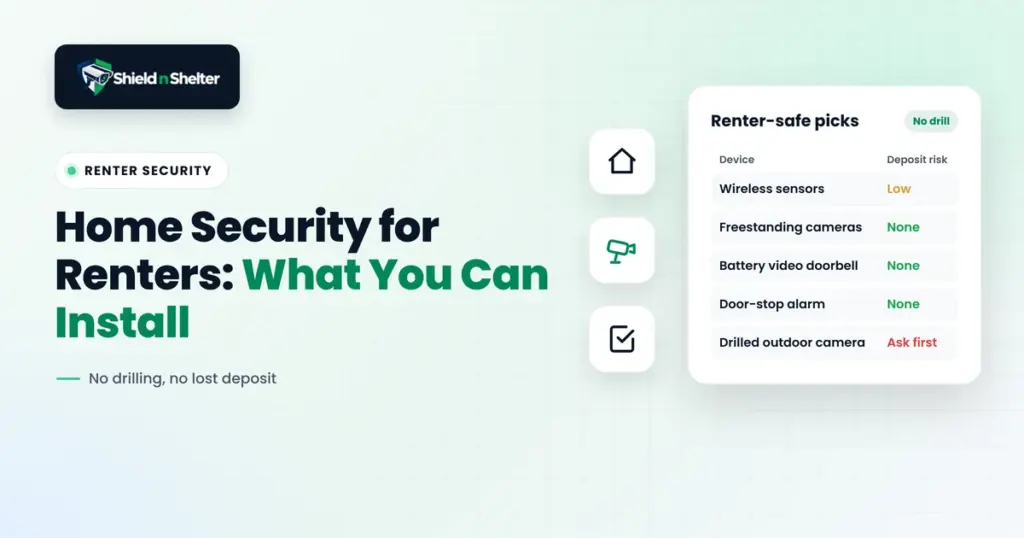
Renters don’t have as much freedom as homeowners (see our guide to home security for renters). They cannot install security devices independently or drill into walls randomly.
So, without drilling, here’s how you can set up screen or storm doors:
- Adhesive-mounted slide bolt or latch. Lightweight, inexpensive, and requires no drilling. Instead of using screws, the bolt sticks directly to the frame. The same goes for rings and hooks in latch systems. The drawback? Adhesives can stop working in heat and excessive humidity. So, it’s not recommended for tropical or high-heat regions.
- Tension/Friction Bar. It’s a bar that’s wedged between the door and the opposite frame to keep them in place. May cause paint damage.
- Portable Travel Lock. It’s a removable device that holds the door closed from the inside. Good fit for lightweight screen or storm doors.
- A simple hook-and-eye latch. Many landlords might grant you permission to install a simple latch if you request it with due notice.
The Cold Truth: Screen or Storm Doors Offer No Real Security
Intruders can easily cut into the mesh with a knife. They can bend the light metal frame. The latch can be easily broken or pulled apart.
But that doesn’t mean these doors are useless. According to a report by the CDC, unintentional drowning is one of the leading causes of injury death for toddlers aged 1-4. So, if you have an uncovered swimming pool as well as a toddler in the house, these screen doors can save their precious lives.
Additionally, screen or storm doors also act as great buffers. They allow you to open the inner door and check who’s outside first. If things go awry, they also grant you a couple of seconds to lock the main door & call the police.
How Can You Improve Security With Screen or Storm Doors?
You can place a simple latch or a bolt on a screen door and call it a day. But for improved home security, here are three things you should remember:
- Invest in a high-quality deadbolt for the main door (check its lock pick resistance grade).
- Install a heavy-duty strike plate and make sure all screws in the hinges are well-set into the walls so they don’t come apart easily.
- Place your cameras wisely and keep footage of all access points, following a camera placement guide.
The Bottom Line
Screen or storm doors may not provide real protection, but they can make your life easier. You can keep out the insects and keep in the kids.
But at the same time, you should never rely on these doors solely. Always lock the main door if the entrance is unsupervised, and keep your security cameras up and running so intruders cannot get to you as easily.