
Anyone who’s tried pricing out a home security system has probably hit the “Price” wall. One site says a basic kit costs $45. Another says the “average” system is $747.
Third one is pushing a $3,000 package with four cameras that a two bedroom house probably doesn’t need. It’s a lot to sort through.
Let’s actually break this down in a way that makes sense. Home security system cost really comes down to three things: how many devices are involved, whether it’s a DIY install or a professional one, and whether there’s professional monitoring or just an app doing the watching. Once those three things are separated out, the pricing stops feeling so random.
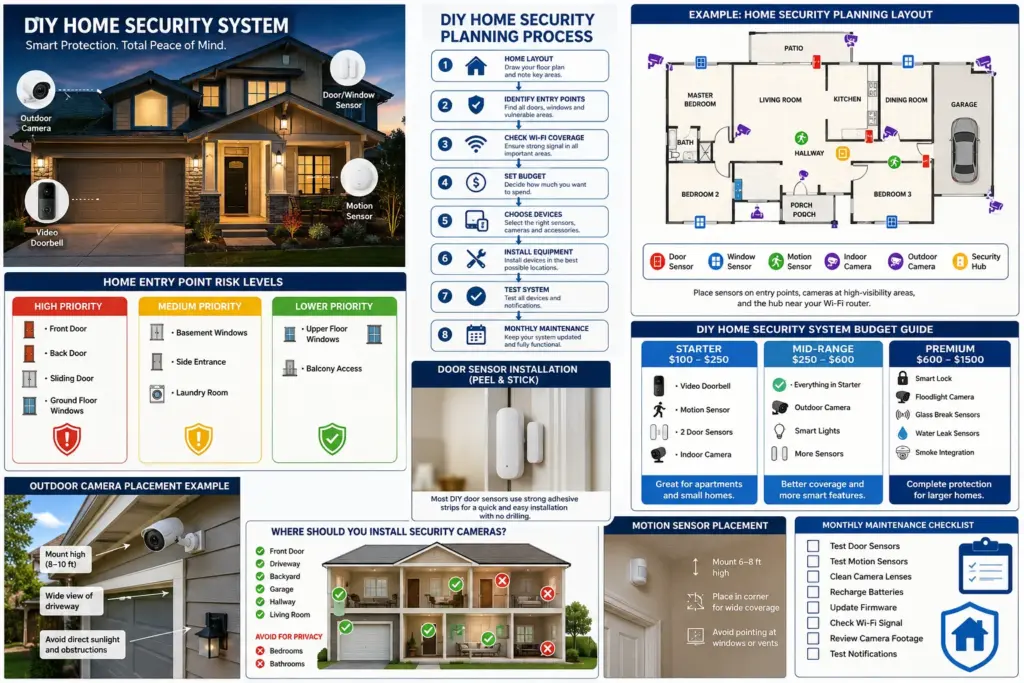
Here’s how the three common tiers actually shake out in 2026, based on what’s currently on the market.
Budget Tier: $200 to $500
This is the “just want to know if someone opens the front door” tier. It’s DIY, self monitored, and built around the basics, a hub, a couple of sensors, maybe one camera.
Typical device count:
1 hub or base station
2 to 3 door and window sensors
1 motion sensor
1 indoor or outdoor camera
Basic DIY starter kits at this level usually run somewhere between $200 and $500, with most households spending between $200 and $500 on a basic DIY kit before stepping up to a professionally installed system. For a leaner setup, starter kits with just a hub and a few sensors can come in as low as $150 to $400. And for anyone prioritizing cameras above everything else, a budget conscious buyer can put together a decent camera setup for under $300.
Monitoring at this tier is usually just the app, which is free or close to it. Some brands charge a small monthly fee for cloud video storage, and a real monitoring center watching things adds another $20 to $40 a month.
The honest tradeoff is coverage. This protects the main entry points, not the whole property. That’s fine for plenty of homes, it’s just not the “watches everything” setup some people picture when they hear “security system.”
Mid-Range Tier: $600 to $1,200
This is where most people actually land, and also where the pricing gets the most confusing, since it’s the tier every provider is trying hardest to sell. A mid-range setup usually adds a video doorbell, a couple more cameras, a smart lock, and actual professional monitoring.
Typical device count:
1 hub or base station
4 to 5 door and window sensors
1 to 2 motion sensors
2 outdoor cameras plus a video doorbell
1 smart lock
This tracks pretty closely with what most installers quote as a “typical” job. The average cost of a home security system installation lands around $747, with most jobs falling somewhere between $300 and $1,238. Camera-heavy setups land in a similar range too, since professional camera installation alone averages $1,290, ranging from roughly $590 to $2,040 once labor gets added in.
Folding in smart home features like locks or a thermostat pushes the total toward the higher end. Bundles that tie cameras and sensors into smart locks, lights, and thermostats often run $1,500 and up, with steeper monthly fees for the automation piece. Monitoring at this tier usually sits around $25 to $50 a month depending on whether video verification is included.
This is also the tier where insurance discounts start to matter. A professionally monitored system can knock up to 20 percent off a homeowner’s insurance premium, which can mean $63 to $190 or more back every year. That doesn’t cancel out the monthly fee, but it chips away at it steadily.
Premium Tier: $1,500 to $3,500+
This is the full setup. Whole home coverage, 4K cameras, glass break sensors, smoke and CO detection all tied into one system, and white glove installation where a technician handles the whole thing start to finish.
Typical device count:
1 central hub with cellular backup
8 to 10 door, window, and glass break sensors
2 to 3 motion sensors
4 to 6 outdoor and indoor cameras, often 4K
2 or more smart locks
Smoke, CO, and water sensors
Equipment alone can climb well past $1,500 at this level. A fully built out, professionally installed system can run over $1,500 in equipment costs before labor is even added in. Cameras are usually the biggest driver of that number, since premium outdoor cameras from providers like Vivint run around $399 each, more than double what a mid-tier battery camera costs.
Installation isn’t a quick weekend job at this scale either. Professional installation for larger, custom systems can range from $200 up to $1,500 or more, and it climbs higher on bigger properties with a lot of outdoor coverage to wire up. Add in premium monitoring, which can run as high as $99 a month for things like live video verification and remote deterrence, since professional monitoring across the industry generally ranges from about $5 to $99 a month depending on what’s bundled in, and a fully loaded premium system with a year of monitoring can land somewhere between $2,500 and $3,500, sometimes more.
Planning First vs. Buying the Installer’s Package
Here’s the part most cost guides skip, and it’s arguably the part that matters most.
The biggest thing that moves the total spend isn’t which tier a household lands in. It’s whether the system comes from a provider’s pre-built bundle, or gets planned out first with only the devices the home actually needs.
Installer packages are built to sell, not to fit a specific home. The “recommended” bundle usually throws in a sensor or two and a camera that isn’t really needed, just to hit a price point that looks good on the sales page. Then once the technician is standing in the living room, the upsells start.
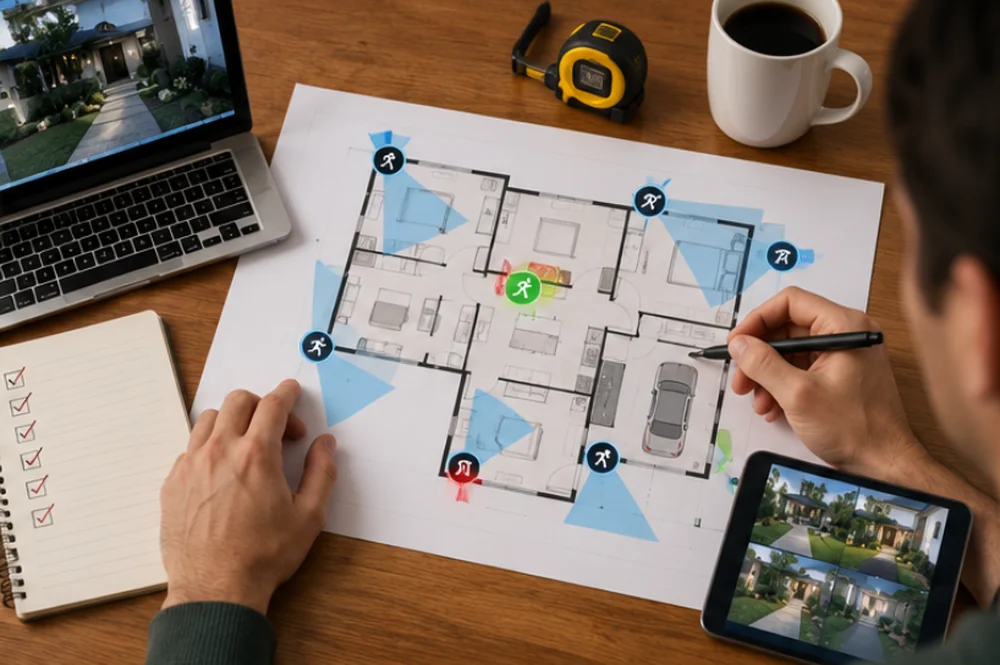
That pattern played out pretty directly with one homeowner who came in already holding a quote from a national provider for a mid-range package. Before any equipment was purchased, the property’s actual entry points and blind spots were mapped out, and the system was built around that instead of the provider’s default bundle. The result was fewer devices, better placed, with full coverage where it actually counted. Total savings compared to the original quote came out to roughly $1,400, without losing anything that mattered for the home.
That’s not really a knock on installer packages, they’re priced for an average house, and most houses aren’t average. A garage that isn’t visible from the street doesn’t need the same camera setup as a corner lot. A one story ranch doesn’t need the sensor count of a two story house with a finished basement. Planning first means paying for a home’s actual gaps, not a generic bundle padded out with devices nobody will ever look at again.
The Sticker Price Isn’t the Real Number
Whatever tier ends up fitting a given home, the number on the box is only half the story. Monitoring fees, activation costs, and permits all shift the real total by a fair amount over a couple years, and the gap between a planned system and a pre-bundled one can easily run into the hundreds or thousands. Figuring out what the home actually needs first, then shopping the tiers, tends to beat doing it the other way around.
Before spending anything, it is worth checking whether the system you already own is underperforming rather than under-specified. Auditing and fixing an existing system often recovers more coverage than a new purchase does.
Need Professional, Brand-Agnostic Guidance?
Shield & Shelter provides 100% independent residential security consulting with zero equipment markups and zero vendor kickbacks.